
 Image 1 of 2
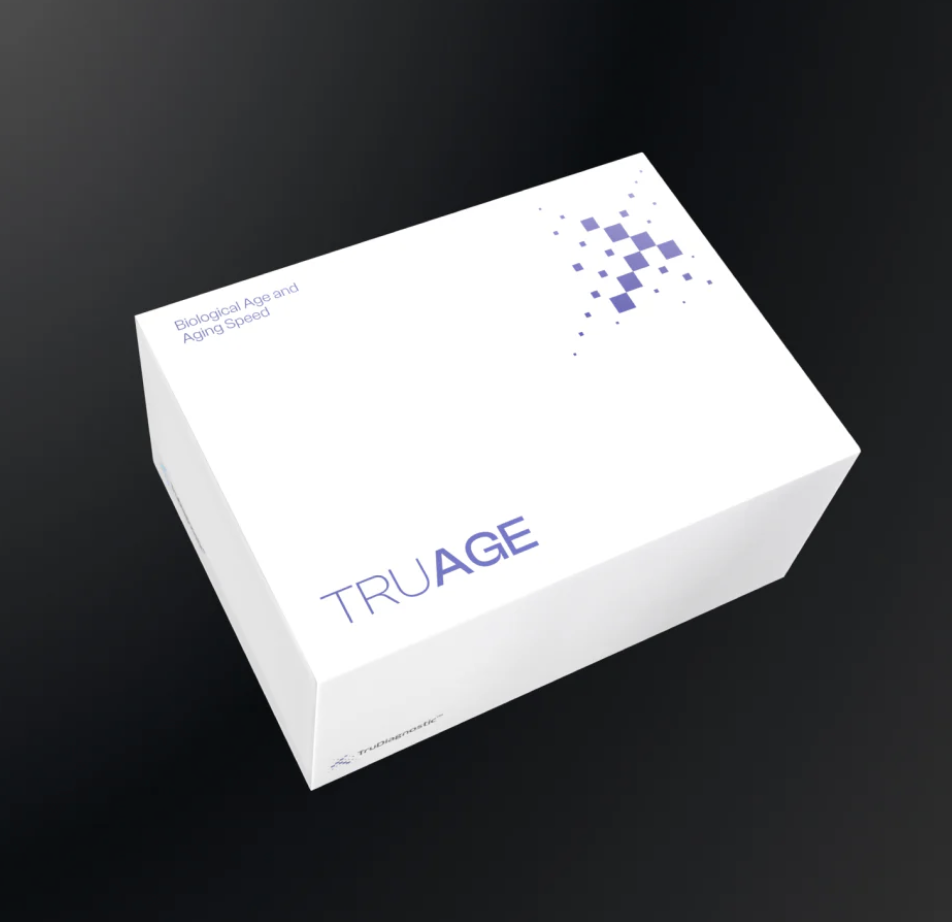 Image 2 of 2
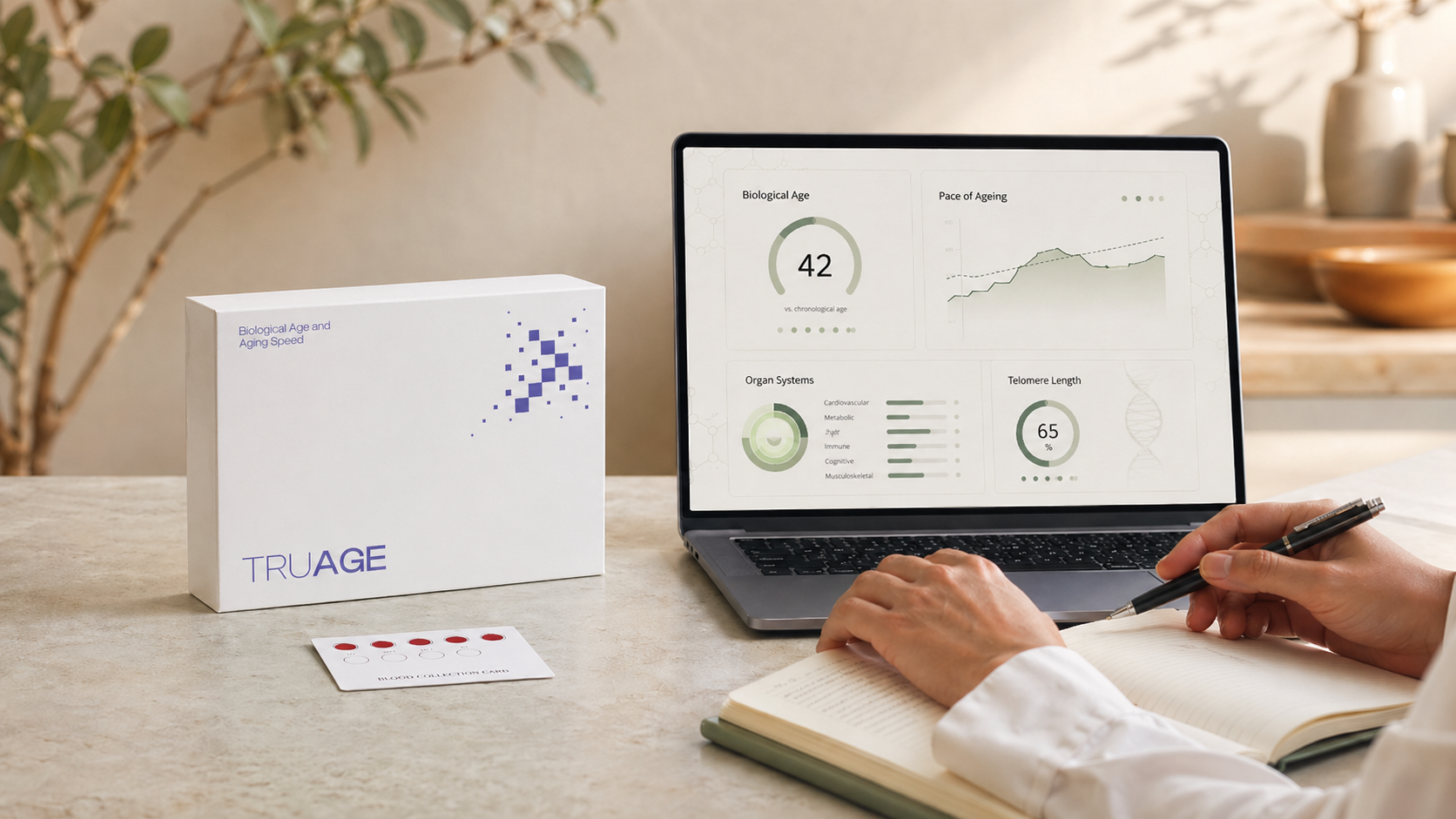
A more complete view of biological age, ageing speed and key body systems.
TruAge is a comprehensive at-home epigenetic test that looks beyond one biological age number. It brings together biological age, pace of ageing, telomere length, organ-system ageing, immune insights, inflammation and lifestyle impact reports.
This test is designed for wellness, longevity and educational insights only. It is not intended to diagnose, treat, cure or prevent disease.
Source image: TruDiagnostic product image, hosted by Wellbeing George.
Not just biological age. A deeper ageing profile.
TruAge uses DNA methylation analysis from an at-home blood spot sample to estimate how your body is ageing at a cellular level, how quickly you are ageing, and which body systems may be showing signs of accelerated or slower ageing.
OMICmAge estimates your biological age and how it compares with your chronological age.
DunedinPACE™ estimates the current speed at which your body is ageing.
SYMPHONYAge provides age estimates across key body systems such as brain, heart, liver, immune, metabolic and inflammatory ageing.
Built for people who want a serious longevity baseline.
Measure
Establish a baseline for your biological age, pace of ageing, telomere length and organ-system ageing.
Understand
Look beyond a single score and identify which healthspan signals may deserve attention.
Retest
Track whether your ageing markers may be changing after focused lifestyle and health interventions.
What you receive in the TruAge report.
TruAge is designed to provide a broad biological-age and longevity snapshot, rather than only reporting a single age score.
OMICmAge
Your estimated biological age, designed to show whether your body appears older or younger than your chronological age.
SYMPHONYAge
Age estimates for 11 key body systems, including brain, heart, liver, immune, metabolic, lung, kidney and inflammatory ageing.
DunedinPACE™
Your pace-of-ageing score, estimating how many biological years your body is ageing for each calendar year.
Telomere Length
An epigenetic telomere length estimate that can be reviewed alongside other ageing and healthspan markers.
Immune & inflammation
Includes immune-cell reporting and inflammation-related insights such as DNAm CRP and IL-6.
Lifestyle impact
Includes insights relating to smoking impact, alcohol impact, fitness/function and ageing-related lifestyle signals.
See how your body appears to be ageing at the cellular level.
OMICmAge is the biological age section of the report. It compares your estimated biological age with your chronological age and gives a more personalised starting point for healthspan tracking.
- Estimated biological age
- Comparison with chronological age
- Results-over-time tracking after retesting
- Useful as a baseline for future health and longevity tracking
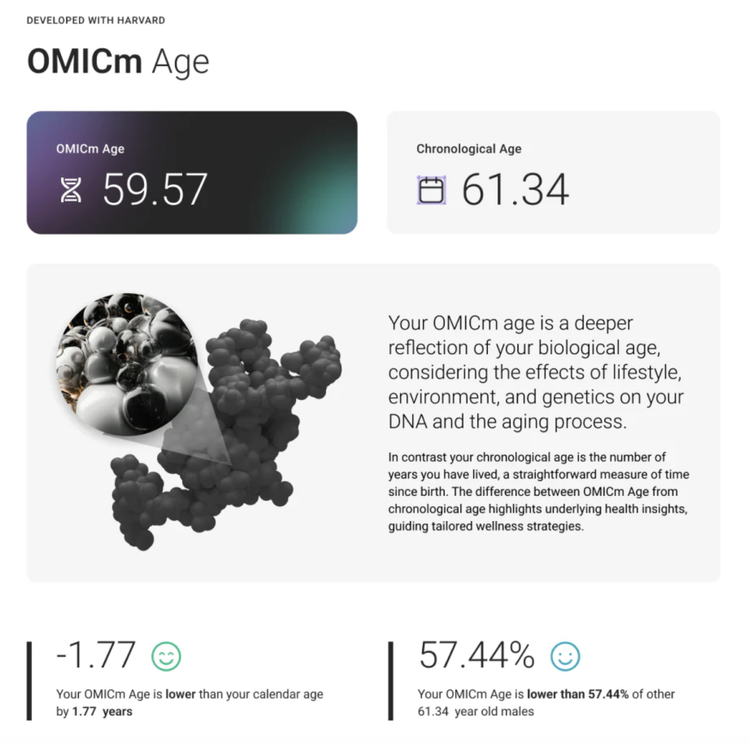
Source image: TruDiagnostic sample report image, hosted by Wellbeing George.
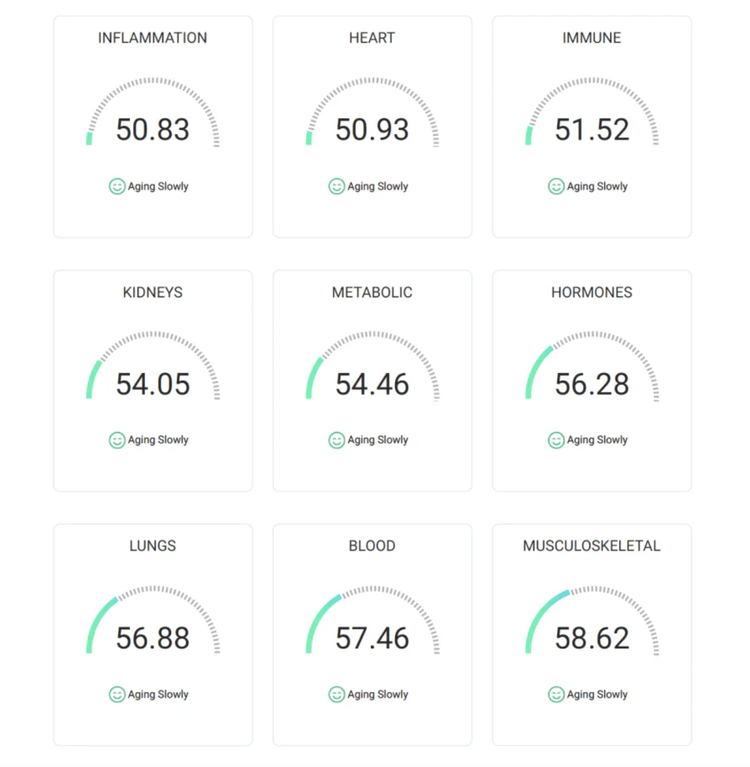
Source image: TruDiagnostic sample report image, hosted by Wellbeing George.
Identify which body systems may be ageing differently.
The SYMPHONYAge report estimates the biological age of 11 body systems. This matters because two people can have a similar overall biological age but very different system-level patterns.
Brain, blood, heart, lung, liver, hormone, immune, inflammation, kidney, metabolic and musculoskeletal ageing.
Nutrition, movement, sleep, recovery, stress, supplementation and further testing priorities.
It is not a diagnostic scan or replacement for medical pathology, imaging or specialist care.
Understand how fast your body appears to be ageing right now.
DunedinPACE™ is designed to estimate the rate at which your body is ageing. This makes it especially useful for people who are making health changes and want a measurable baseline to compare against in future.
- A score around 1.0 is generally used as the one biological year per calendar year reference point
- Below 1.0 generally suggests a slower pace of ageing
- Above 1.0 generally suggests a faster pace of ageing
- Useful for retesting after meaningful lifestyle interventions
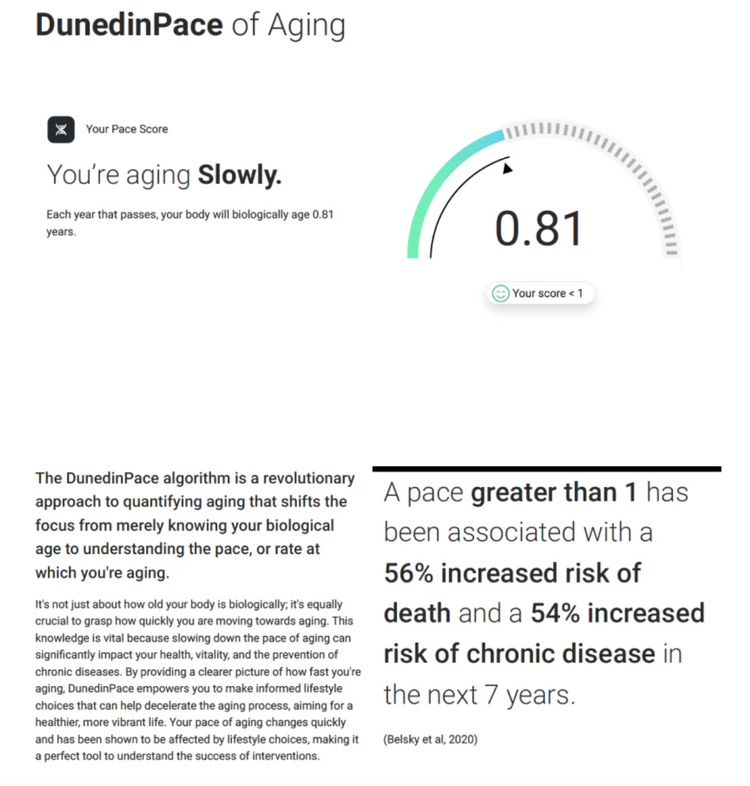
Source image: TruDiagnostic sample report image, hosted by Wellbeing George.

Your report is only useful if you know what to do next.
TruAge can provide a lot of health data, but during a consultation we help you interpret that data and put a practical protocol in place. We look at your results alongside your health history, symptoms, nutrition, sleep, stress, training, supplements, medications and goals, so the plan is completely tailored to you.
- Understand your report in plain language
- Identify which ageing signals deserve the most attention
- Avoid overreacting to isolated numbers
- Build a realistic protocol around food, lifestyle and supplementation where appropriate
A comprehensive at-home test, with support available when your results arrive.
Order
Choose the test option above, with or without a 1:1 consultation.
Collect
Complete your at-home blood spot sample using the instructions in your kit.
Send
Return your sample for laboratory processing and epigenetic DNA methylation analysis.
Review
Receive your online reports and, if selected, review them in a 60-minute Zoom consultation.
TruDiagnostic notes that results are generally available online within approximately 3–4 weeks of lab receipt. Timing may vary depending on shipping, laboratory processing and sample suitability.
Your report includes guidance, but tailoring it to you personally is essential.
Interventions
The report discusses lifestyle and nutrition categories that may influence biological ageing markers.
Goals
Use your results to set realistic goals around sleep, movement, diet, stress and recovery.
Follow-up
We suggest retesting around 3–6 months later to assess changes and review whether your plan is moving things in the right direction.
Best suited to people who want a deeper longevity baseline.
Health optimisers
People already improving nutrition, exercise, sleep, recovery and stress who want a deeper ageing baseline.
Data-driven clients
People who want more than a simple biological age score and prefer a broader report across multiple systems.
Longevity trackers
People interested in retesting over time to see whether their biological age, ageing pace or system scores may be changing.
If you have active symptoms, fatigue, digestive concerns, hormone issues or suspected nutrient deficiencies, you may also need broader clinical assessment or functional testing. The consultation option can help place your results into a more complete health picture. If you are not sure whether this is the right starting point, you are welcome to talk it through with us first.
Book a free 15-minute callTrusted by clients across Australia.
Google reviews
“I would 100% recommend Georgina and Wellbeing George. Georgina has helped me so much with my autoimmune condition and long term chronic pain. I am now nearly pain free, have so much more energy, and just feel better overall. She is incredibly supportive and made me feel comfortable and confident throughout the whole process.”
Jess, Australia“I highly recommend Wellbeing George. The whole process for the testing is really well explained and very thorough. We have had great results from this and the supplements recommended have made massive changes for our health.”
Simon, Australia“The team at Wellbeing George are amazing to deal with and very professional. I was unsure what to expect, but after the free consult I was convinced it was exactly what I needed. Post testing, the reporting is next level with plenty of detail, and the consultation explained everything clearly in simple terms.”
Brett, Australia“Exceptional strategies to uplevel your health. Do not think about it, run to get help from this team. You will wonder why you did not do this sooner.”
Julie, Australia“The whole process for my DNA methylation test was seamless. A very professionally run practice by Georgina and her team. My debrief consultant knew the whole ins and outs of my results and had a way of explaining it all in simple terms.”
D, AustraliaCommon questions before ordering.
Clear answers to help you understand what TruAge can and cannot tell you.
What does the TruAge test measure?
TruAge includes reports such as OMICmAge biological age, SYMPHONYAge organ-system age scores, DunedinPACE pace of ageing, DNAm Telomere Length, immune insights, inflammation-related markers, fitness/function and lifestyle impact reports.
How is this different from TruAge PACE?
TruAge PACE is a more focused test centred on pace of ageing and telomere length. TruAge is broader and includes biological age, organ-system age scores and additional immune, inflammation, fitness and lifestyle reports.
How does this compare with the Telomere Length Test?
Our Telomere Length Test is a narrower, lower-cost option that looks at telomere length on its own. TruAge includes an epigenetic telomere length estimate as well as biological age, pace of ageing and organ-system reporting, so it suits people who want the broader picture rather than a single marker. See the full biological age testing comparison for a side-by-side view.
What are the 11 organ systems?
The report includes ageing insights across systems such as brain, blood, heart, lung, liver, hormone, immune system, inflammation, kidney, metabolic and musculoskeletal ageing.
Do I need the 1:1 consultation?
The test-only option may suit you if you are comfortable reviewing the report yourself. The consultation option is best if you want help interpreting the full report and creating practical food, lifestyle and supplement priorities where appropriate. If you are unsure which option fits, you can book a free 15-minute call to talk it through.
How often should I retest?
We suggest retesting around 3–6 months later to assess changes, then periodically over time depending on your goals.
Is this a diagnostic medical test?
No. This test is intended for wellness, longevity and educational insights. It does not diagnose, treat, cure or prevent disease and should not replace medical advice, pathology testing or care from your GP or specialist.
Can this replace blood tests?
No. TruAge provides epigenetic insights and should be viewed alongside health history, symptoms, lifestyle and relevant pathology testing. It does not replace standard blood tests or medical assessment.
How are results delivered?
Results are delivered online after your sample has been received and processed by the laboratory. If you choose the consultation option, your practitioner will walk through the report with you by Zoom.
References & further reading: TruDiagnostic: TruAge epigenetic testing · MedlinePlus Genetics: What is the epigenome? · NATA: National Association of Testing Authorities, Australia

Reviewed by Georgina Waugh
Clinical Nutritionist, BHSc Nutritional Medicine
Last updated: 26 August 2026
Sources reviewed: TruDiagnostic test and report documentation, MedlinePlus Genetics and NATA.
Important: TruAge is intended for wellness, longevity and educational insights only. It is not intended to diagnose, treat, cure or prevent disease. Results should be interpreted alongside your health history, symptoms, lifestyle and relevant pathology testing. Always seek advice from your GP or qualified healthcare provider for medical concerns.