
Iron rich foods, ranked by what you actually eat
Most iron lists rank food per 100 grams, which is how dried thyme ends up on top. You don’t eat 100 grams of thyme. This one ranks Australian foods by a normal serve.

Reviewed by Georgina Waugh, Clinical Nutritionist and ANTA member. Updated 14 November 2026.
General information, not medical advice. What you eat isn’t the same as your iron levels, and only a blood test shows those.
Top 10 iron rich foods, by a normal serve
The foods highest in iron per ordinary serve, similar foods grouped, and how much of a woman’s 18 mg each one covers. Meat is at FSANZ’s small serve.
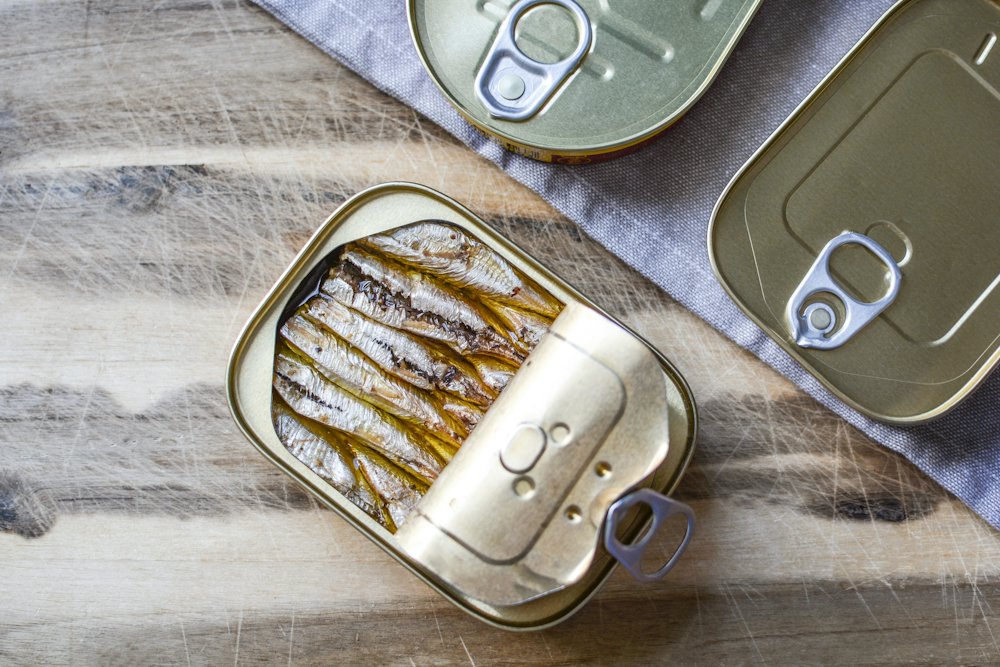
Tinned smoked seafood
- 1Smoked oysters, canned1 can, 85 g14.3 mg
- 2Smoked mussels, canned1 can, 105 g13.8 mg
One tin gives about three quarters of a day’s iron, and it keeps in the pantry for months.
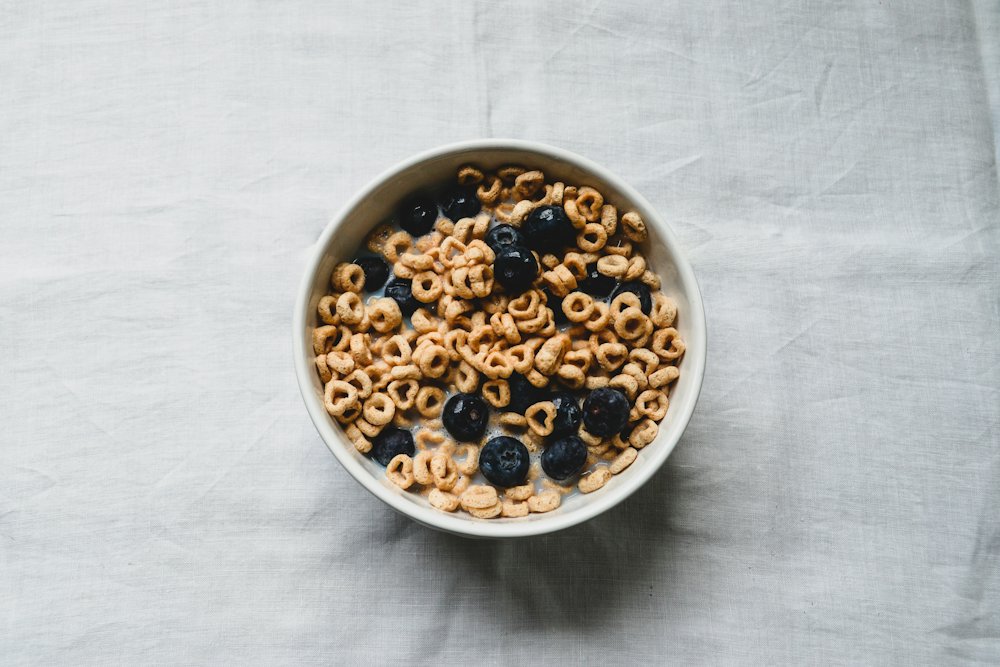
Iron-fortified cereal
- 3Bran flakes cereal, iron-fortified1 cup, 45 g7.6 mg
Two iron-fortified wheat biscuits give 4.9 mg. The added iron is the plant kind, so have it with fruit rather than coffee.
Liver and kidney
- 4Lamb kidney, cooked1 kidney, 60 g6.8 mg
- 5Lamb or veal liver, cooked1 slice, 50 g5.5 mg
Liver is also very high in vitamin A: a 50 gram slice of lamb liver carries about 15,500 µg, around five times the daily upper limit. An occasional food, and one to check with your GP or midwife if you’re pregnant or trying to be.
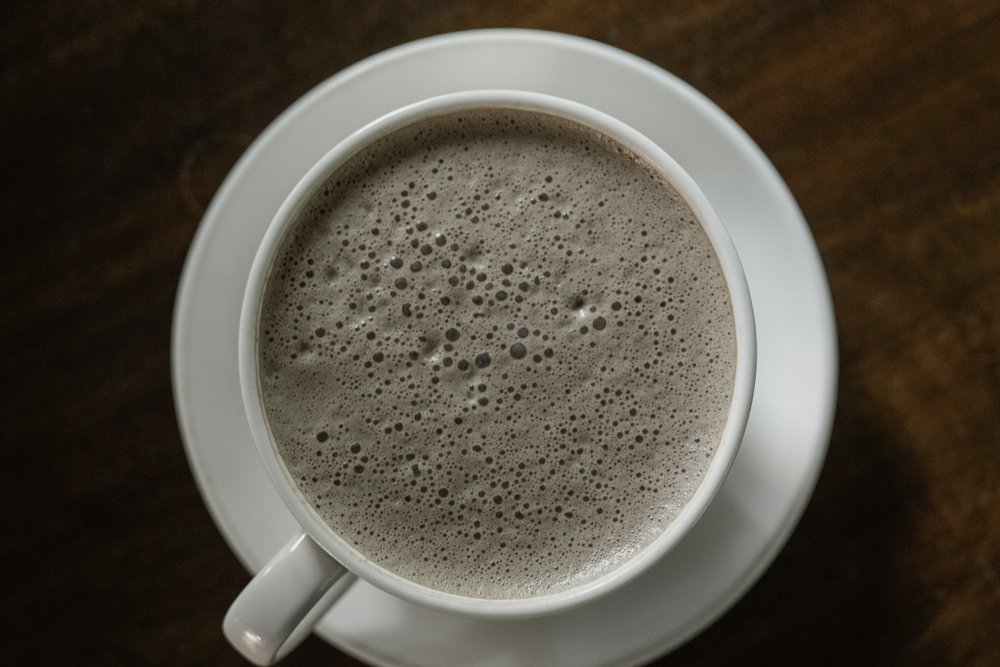
Iron-fortified chocolate malt drink
- 6Chocolate malt drink powder, iron-fortified1 sachet, 20 g5.2 mg
The Milo kind. The iron is added to the powder, so look for “added iron” on the label.
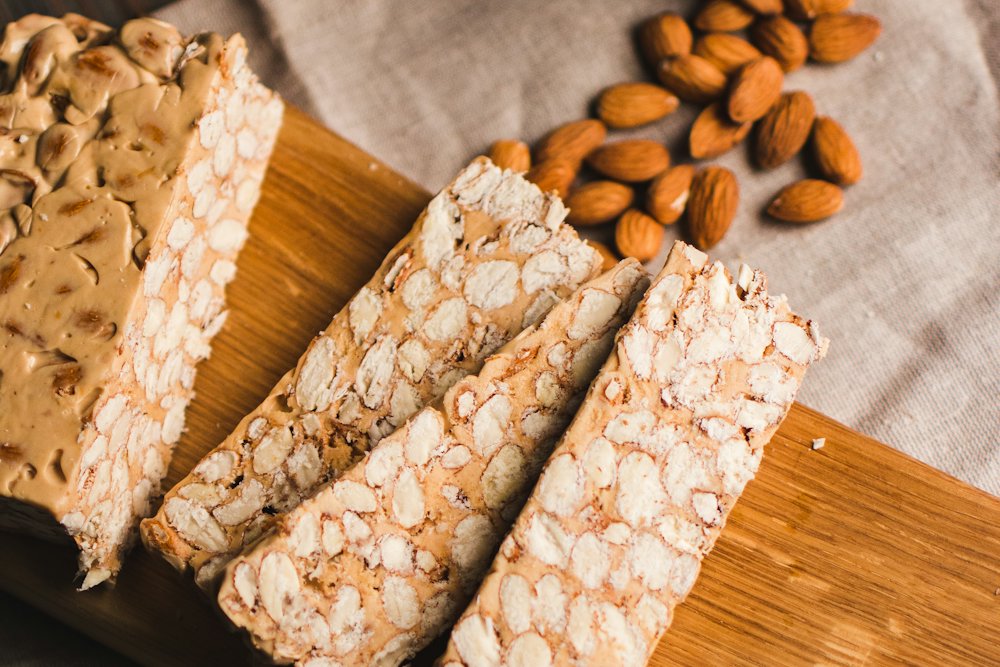
Tempeh
- 7Tempeh, fried1 slice, 50 g4.6 mg
Fried tempeh is FSANZ’s only tempeh entry, so read this one as a guide.
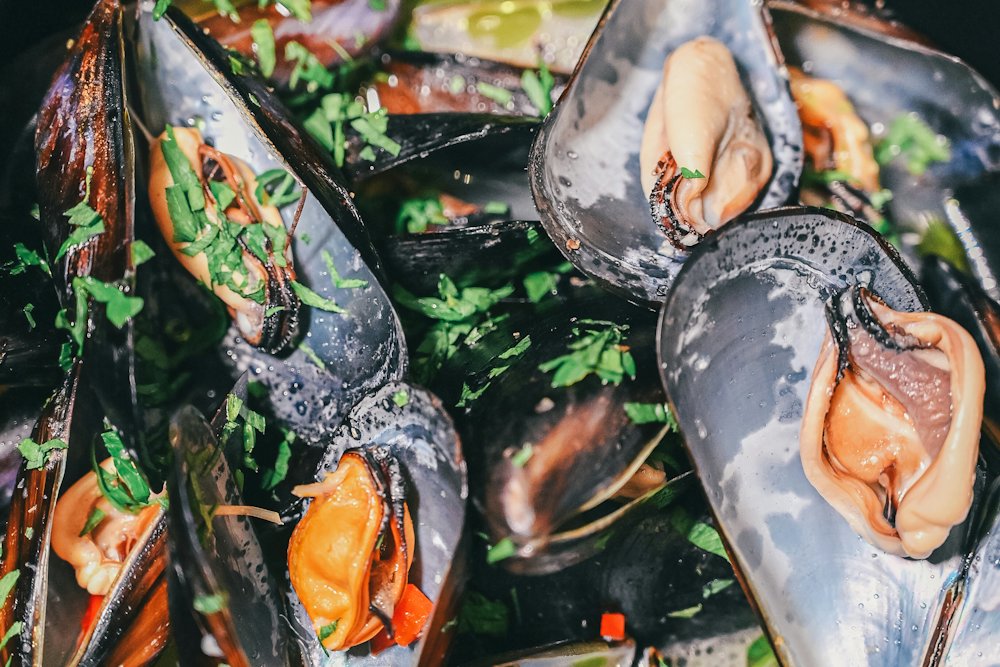
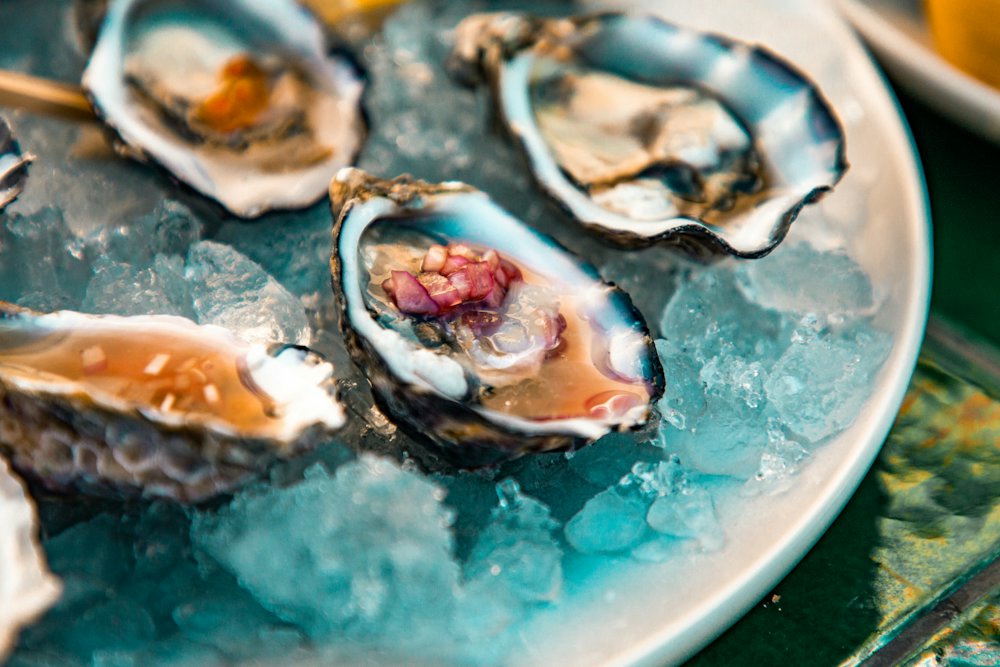
Fresh oysters and mussels
- 8Oysters6 oysters, 90 g3.6 mg
- 9Mussels, cooked10 mussels, 120 g3.6 mg
Lower than the smoked tins, and still one of the best fresh sources.
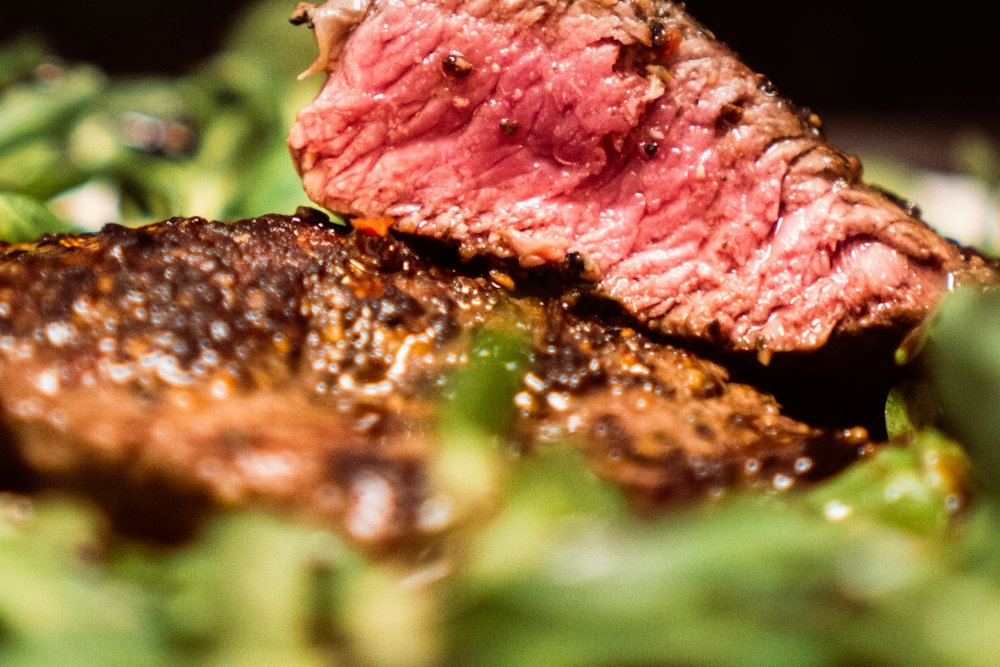
Kangaroo
- 10Kangaroo fillet, cookedsmall fillet, 101 g3.6 mg
At a bigger serve, red meat climbs: a medium 230 gram kangaroo fillet gives 8.1 mg and a medium steak 5.3 mg. Chicken breast (0.5 mg) and tinned tuna (1.0 mg) are good food, just not big iron sources.
How much iron do you need a day?
| Who | Iron a day |
|---|---|
| Women 19 to 50 | 18 mg |
| Women 51 and over | 8 mg |
| Men 19 and over | 8 mg |
| Pregnancy | 27 mg |
| Breastfeeding | 9 mg |
The gap between women and men is periods. A woman who menstruates needs to absorb about 1.5 mg of iron a day, against about 1 mg for a man, and only a small share of the iron on your plate gets absorbed. From 51 the target drops to 8 mg.
Haem and non-haem iron: why the type matters
Haem iron, in meat, chicken and fish, is absorbed easily. Non-haem iron, in plants, fortified foods and eggs, is absorbed less well. Across a whole diet, about 18% of the iron is absorbed on a mixed diet and about 10% on a vegetarian one, which is why the target is about 80% higher if you eat mostly plants.
What’s on the plate with plant iron changes how much you take in.
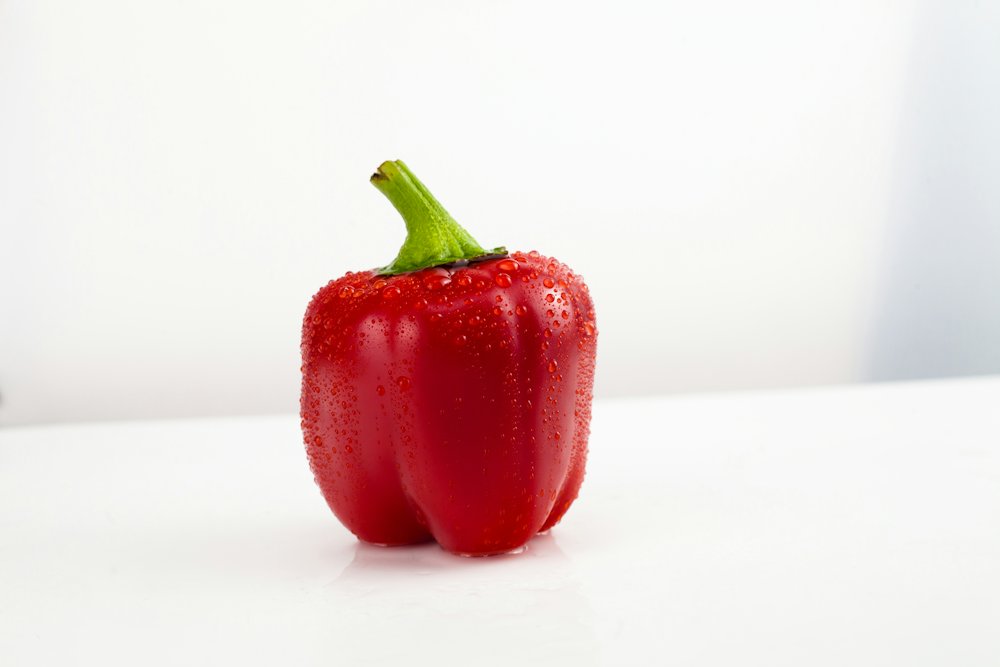
What 18 mg looks like in a day
It takes a bit of planning. Here’s one day that gets there.
- Breakfast2 iron-fortified wheat biscuits, with strawberries4.9 mg
- Lunch2 poached eggs on a lentil and baby spinach salad5.4 mg
- Snack2 tablespoons of pumpkin seeds and a box of dried apricots2.9 mg
- DinnerA small kangaroo fillet with cooked kale5.5 mg
18.7 mg across the day, just past the 18 mg target.
A plant-only day built the same way, with chia, tempeh and edamame, lands near 20 mg. With plant iron absorbed less well, a mostly plant-based woman is aiming nearer 32 mg, so the vitamin C habit matters most for her.
Iron rich vegetarian and plant-based foods
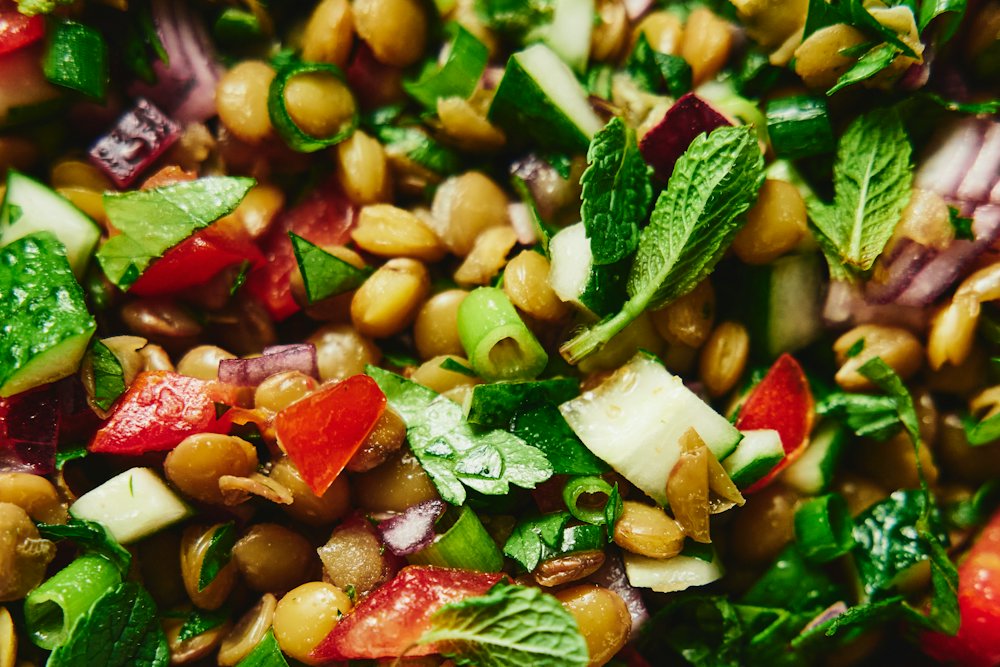
The plant serves that do the most. It’s all non-haem iron, so pair it with vitamin C and keep tea and coffee for later.
| Food and serve | Iron | Of 18 mg | Per 100 g |
|---|---|---|---|
| Tempeh, fried1 slice, 50 g | 4.6 mg | 26% | 9.2 mg |
| Kidney beans, cannedsmall can, 125 g | 2.6 mg | 15% | 2.1 mg |
| Chia seeds2 tablespoons, 20 g | 2.6 mg | 14% | 13.0 mg |
| Natural muesli with nuts and seedssingle serve, 60 g | 2.5 mg | 14% | 4.2 mg |
| Lentils, cooked¾ cup, 150 g | 2.4 mg | 14% | 1.6 mg |
| Edamamesmall can, 125 g | 2.4 mg | 13% | 1.9 mg |
| Chickpeas, cannedsmall can, 125 g | 2.2 mg | 12% | 1.8 mg |
| Quinoa, cooked1 cup, 193 g | 2.1 mg | 12% | 1.1 mg |
| Kale, cooked5 leaves, 90 g | 1.9 mg | 11% | 2.1 mg |
| Tofu, firm2 slices, 70 g | 1.6 mg | 9% | 2.4 mg |
Iron rich breakfast foods
Breakfast is the easiest meal to load: two iron-fortified wheat biscuits (4.9 mg), a cup of iron-fortified bran flakes (7.6 mg), natural muesli with nuts and seeds (2.5 mg) or two poached eggs (1.9 mg). Check the box, because unfortified wheat biscuits give about half. Add strawberries or kiwifruit, and save the coffee for mid-morning.
Iron rich foods for women and heavy periods
Heavy periods are one of the most common reasons iron runs low, so if yours are heavy, raise it with your GP. And food can’t tell you where your levels sit. Ask for iron studies, not just ferritin: ferritin (your iron storage) can read falsely high when there’s inflammation in the body, and the full panel gives you the truer picture.
Iron is rarely the only thing worth checking when you’re tired. The bloods we look at first:
- Full blood examination
- Iron studies
- B12
- Folate
- Full thyroid panel with antibodies
- Vitamin D
- Fasting homocysteine
- Liver enzymes and electrolytes
- Fasting insulin and glucose
- Serum zinc
We can give you a list to take to your GP.
Our page on ferritin levels shows where a result sits, and we’ve written about the symptoms of low iron. Already have recent bloods? Our Blood Test Analysis is fifteen minutes one-on-one with a clinical nutritionist going through them, for $79. If you’re pregnant or planning to be, your GP or midwife is the place for iron advice.
Check the iron in your own meals
Type what you ate in plain words and our calculator shows the iron, and eight other nutrients, against your daily target.
Try the micronutrient calculatorEating well and still running on empty?
Food is one piece. Sleep, stress, your cycle, how well you absorb what you eat and which bloods are worth asking for all sit beside it. That’s what the free 15-minute call is for: we look at the whole picture with you and work out the next step.
Book a free 15-minute callFifteen minutes, no cost, by video from anywhere in Australia and the world.
Common questions about iron rich foods
Which food has the most iron?
Per normal serve, a tin of smoked oysters (14.3 mg) and a tin of smoked mussels (13.8 mg). Next come iron-fortified bran flakes (7.6 mg a cup), lamb kidney (6.8 mg) and lamb or veal liver (5.5 mg a slice). Per 100 grams, dried herbs top the list, but you eat them by the pinch.
Which red meat is the best source of iron?
Liver and kidney carry the most. Of the cuts most people cook, lamb mince has 5.0 mg per 100 grams, kangaroo 3.5 mg and lean beef steak 2.5 mg. A medium 230 gram kangaroo fillet gives about 8.1 mg.
Is spinach high in iron?
Less than its reputation. A 60 gram bag of baby spinach gives about 1.0 mg. Cooked spinach is denser, 3.6 mg per 100 grams, because it wilts down. It’s plant iron, so add vitamin C.
What fruit is high in iron?
Fresh fruit is low. Dried apricots are the exception, 1.2 mg in a 40 gram box. Fruit’s bigger job is the vitamin C that helps you absorb plant iron: kiwifruit, strawberries and oranges with a meal.
Are eggs a good source of iron?
Two poached eggs give 1.9 mg, about 11% of the 18 mg women aged 19 to 50 need. It’s the plant-type iron, so they do more with capsicum on the side.
What drink is high in iron?
Iron-fortified chocolate malt drinks: a 20 gram sachet of Milo powder gives 5.2 mg. Orange juice with a meal helps you absorb iron, and tea, coffee and red wine with a meal reduce it, so keep those between meals.
Can you have too much iron?
Yes. The adult upper limit is 45 mg a day from food and supplements together, and too much iron can be toxic, so iron supplements are only for taking under medical supervision.
How can I tell if my iron is low?
Only a blood test can tell you. Low iron can leave you tired, run down and foggy, but so can plenty of other things. Ask your GP for iron studies, not just ferritin.
Sources: NHMRC, FSANZ, ABS, Healthdirect and Lifeblood
- NHMRC. Nutrient Reference Values for Australia and New Zealand: iron. Daily targets by age and sex, pregnancy and the upper limit; haem and non-haem iron; absorption of about 18% from a mixed diet and 10% from a vegetarian diet, so intakes about 80% higher; what increases and reduces absorption; iron needed by menstruating women.
- NHMRC. Nutrient Reference Values for Australia and New Zealand: vitamin A. The adult upper limit of 3,000 µg a day, set for women of childbearing age on the risk to a developing baby.
- Australian Bureau of Statistics. Usual nutrient intakes, 2023. Released 17 March 2026. Average usual iron intake, and the share of Australians below the average requirement for iron, by age and sex.
- Food Standards Australia New Zealand. AUSNUT 2023. Iron and vitamin A per 100 g, and household serve weights for most foods on this page.
- Healthdirect Australia. Foods high in iron. Haem and non-haem foods, vitamin C, and having tea, coffee, red wine and calcium-rich foods between meals.
- Healthdirect Australia. Iron deficiency. Symptoms, heavy periods as a common cause, and iron supplements only under medical supervision.
- Australian Red Cross Lifeblood. Iron deficiency anaemia, clinical guidance: investigation. Ferritin rises with inflammation, infection and liver disease.
Important: This page is general information reviewed by a clinical nutritionist. It isn’t medical advice and doesn’t replace care from your GP or another qualified health professional. Iron values are from FSANZ’s AUSNUT 2023 data for the serve shown, and the same food from another brand can vary.
Reviewed by Georgina Waugh
Clinical Nutritionist, BHSc Nutritional Medicine, member of the Australian Natural Therapists Association
Last updated: 14 November 2026